REVIEW · SEDONA
The Night Sky Star Story, Galaxy, and Sedona Story Tour
Book on Viator →Operated by Adventure Explore and Soar · Bookable on Viator
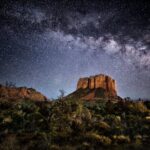
Stargazing with stories feels like time travel. The Night Sky Star Story, Galaxy, and Sedona Story Tour turns Sedona’s night into a lesson, with Chad linking Greek myths and local indigenous star associations to the constellations you can actually spot.
I also love the teaching tools: a play-doh Milky Way, a planisphere, and a laser pointer that help you map Orion, Sirius, Cassiopeia, Taurus, and the Pleiades without any telescope. The one catch: if you want mostly silent star viewing, the format can feel talk-heavy.
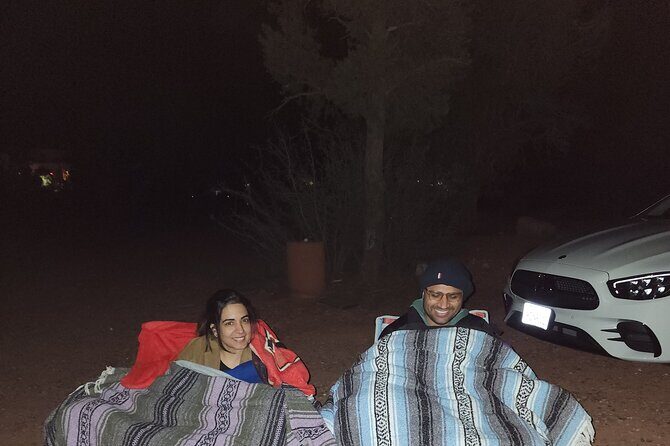
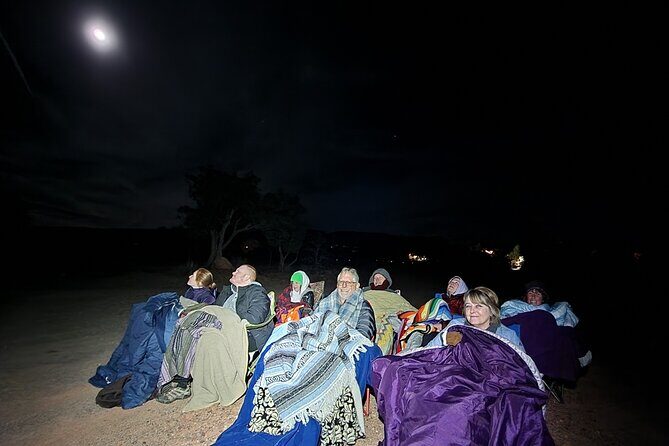
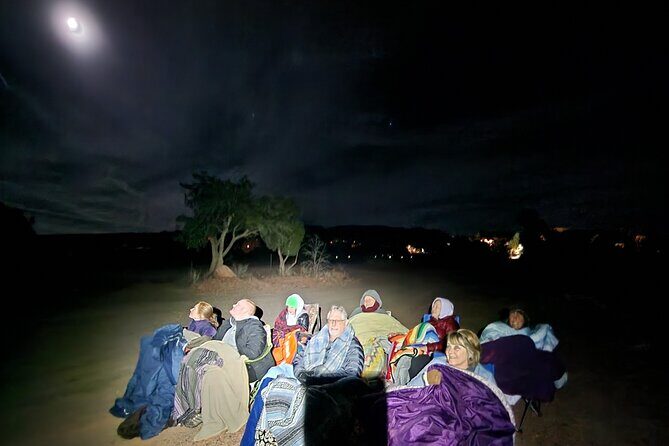
You’ll sit at one location for about two hours, and the experience is built for comfort with chairs plus blankets and hand warmers. Dress for real night cold in northern Arizona, even if the day feels mild.
In This Review
- Key things to know before you go
- Sedona’s night-sky start point: what the first 10 minutes are really like
- Chad’s style: big-picture astronomy you can follow without a degree
- The first phase: constellation stories that point to what’s above
- What you can expect to see
- The teaching visuals: play-doh Milky Way and planisphere magic
- The galaxy phase: “Spaceship Earth” and why perspective matters
- How the stories tie in with Sedona’s bigger themes
- When clouds roll in: Sedona’s micro-climate and your Plan B
- Price and value: is $100 worth 2 hours of star stories?
- Logistics that matter: tickets, phones, and what to bring
- Who should book this (and who should choose a different style)
- Should you book it? My practical take
- FAQ
- What time does the tour start?
- How long is the tour?
- How much does it cost?
- Is the tour offered in English?
- Do they use a telescope?
- What should I wear?
- Will we be seated during the tour?
- What if the sky is cloudy?
- Are pets allowed?
- Is a service animal allowed?
- How big is the group?
Key things to know before you go
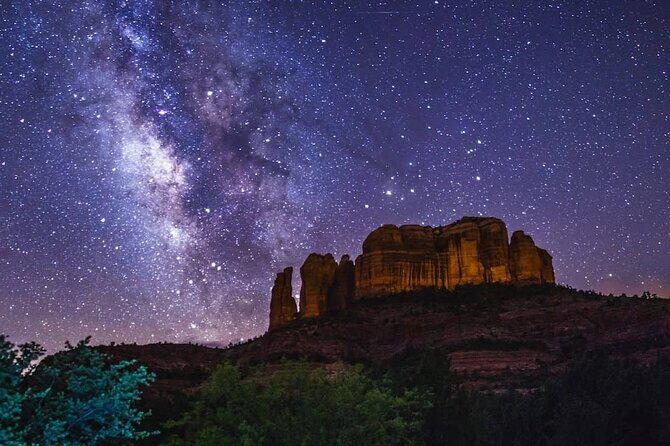
- Naked-eye astronomy, not telescope viewing: you learn what you can see from Sedona’s sky.
- Stories with real sky mapping: myths and indigenous associations connect directly to constellations.
- Visual props do the heavy lifting: play-doh Milky Way, planisphere, and more.
- Chad’s laser pointer helps you follow along fast: you don’t have to guess where to look.
- Small group size: up to 15 people, so it stays interactive.
- Warmth is part of the plan: chairs, blankets, and hand warmers are provided.
Sedona’s night-sky start point: what the first 10 minutes are really like
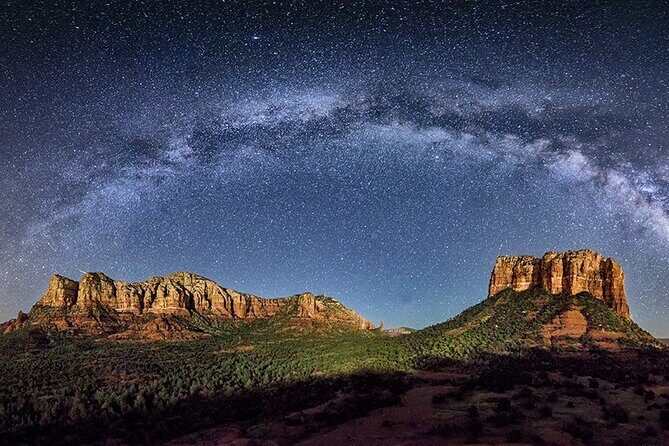
The tour starts at 77 Cultural Park Pl, Sedona, AZ, with a 7:30 pm launch and about 2 hours 5 minutes on the clock. You don’t drive around from scenic stop to scenic stop. You set up once, sit down, and the sky show comes to you.
That single-location approach matters. It keeps the group together and cuts down on the chaos of getting everyone aligned in the dark. It also means you can focus on learning the sky, not on constantly moving and re-orienting.
The setup is comfort-first: chairs are included, and you’ll be given blankets and hand warmers. The vibe is calm and cozy, not rugged. Still, you should dress warmly. Gloves and a warm hat make a real difference once the sun drops and the air cools.
Other stargazing and night sky tours in Sedona

Chad’s style: big-picture astronomy you can follow without a degree
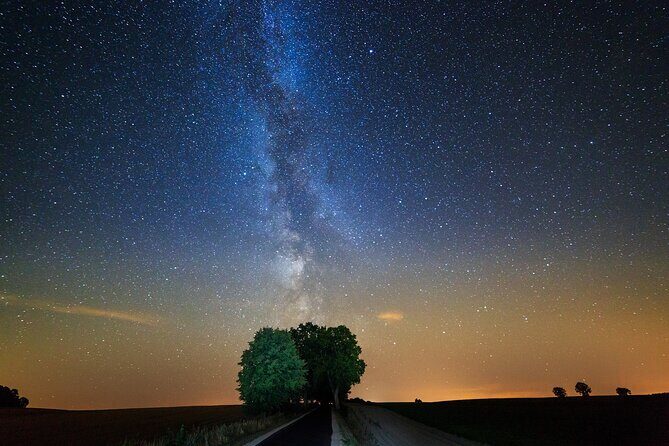
Chad runs this tour as what he calls Big Picture Astronomy. The goal is simple: help you understand the universe in a way that matches how we actually experience it from Earth. No technical math. No telescope requirement. Just your own view of the sky, placed into a bigger context.
A lot of astronomy tours either go super basic or go too technical too fast. This one aims for that middle ground. You learn what you’re seeing, then why it matters, then how it fits into the larger motions of our solar system and our galaxy.
He also uses a teaching rhythm that keeps momentum. He’ll show you what to look for, explain the concept, connect it to a story, and then bring you back to the sky again. If you like an active guide who keeps the group engaged, you’ll likely enjoy this format.
And if you feel like you need to understand the sky in plain language before you lose the thread, this approach can be a relief. The concepts are built around your perspective from Earth, not around where objects would be in a textbook diagram.
The first phase: constellation stories that point to what’s above
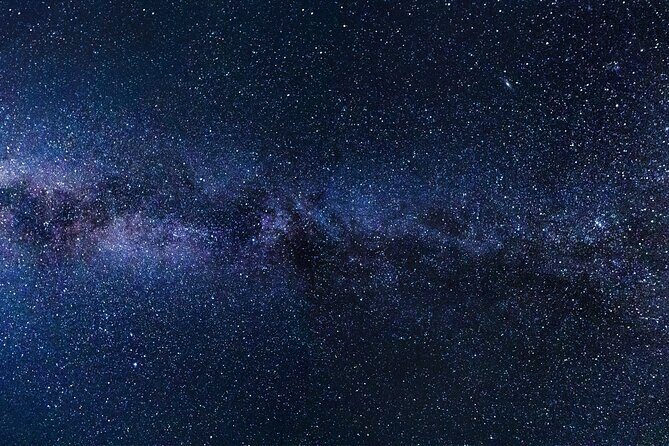
The heart of the tour is myth and meaning mapped onto actual constellations. Chad connects multiple traditions to the night sky, including Greek stories and local indigenous star associations. Instead of treating constellations like random star patterns, you hear them as characters, clues, and cultural references.
This is one of the biggest reasons the experience feels different from a typical stargazing class. You’re not just learning names like Orion or Gemini. You’re learning story structure: who the constellation is linked to, what it represented, and how people used the sky as a shared reference for time and meaning.
A laser pointer keeps this from becoming purely lecture-style. As he tells the story, he points so you can match the narrative to the sky. That makes it easier to remember where things are and what they look like.
What you can expect to see
The tour highlights include a strong mix of winter and spring favorites, depending on the night:
- Orion
- Sirius
- Cassiopeia
- Leo
- Gemini
- Taurus
- Pleiades
- Jupiter
- Saturn
- Big Dipper and Little Dipper
The best part is that the guide is focused on helping you locate these targets with your naked eyes. If you’ve ever looked up in Sedona and felt lost, this part is designed to fix that quickly.
The teaching visuals: play-doh Milky Way and planisphere magic
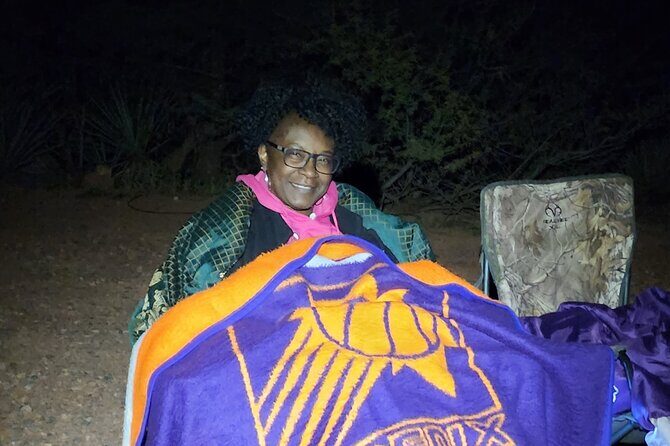
One of the most distinctive features is how the tour uses physical and visual aids. Expect a play-doh Milky Way concept and a planisphere to help you understand where things sit in the sky and how they change with time.
The play-doh Milky Way idea is useful because it turns an invisible structure into something your brain can grasp. The planisphere does a similar job for positions: you get a sense of the sky like a map you can interact with, then step back outside and connect it to what’s overhead.
You’ll also get star-show guidance through a laser pointer during the constellation segments. That combo helps you avoid the classic problem: learning constellation names but still not knowing which stars to point at.
If you learn better by seeing a model, not by listening alone, these props are a big part of why the tour earns such strong satisfaction. They keep you oriented while the stories and astronomy build on each other.
Other evening experiences in Sedona

The galaxy phase: “Spaceship Earth” and why perspective matters
Midway through, the tour shifts toward the wider cosmos: how the sky moves, how our place in the solar system affects what we notice, and how to build a mental model of the galaxy beyond the obvious bright objects.
Chad frames it like a journey. The Earth becomes your ride. The sky becomes your dashboard. The point is that you don’t need specialized gear to understand major ideas like movement, seasons, and how the night sky changes.
This is where the tour can feel less like a simple constellation walk and more like an explanation of how everything fits. If you’re into astronomy but hate the feeling of being overwhelmed, this section is built for your pace.
If, on the other hand, you came hoping for long unstructured time staring up, this part may feel like the guide is steering a bit too much. The tradeoff is that you leave with a clear understanding of what you saw, not just a few photos of pretty stars.
How the stories tie in with Sedona’s bigger themes
There’s also a strong “Sedona story” element. Chad has lived in the area since 1996 and makes connections between the sky, local meaning, and other teachings he’s known for.
You’ll hear references that tie this night tour to his daytime material, described as a vortex-themed experience. Even if you never take the daytime tour, the night sky part stands on its own. The tie-in mainly adds texture and gives the constellation stories more depth.
This works best if you enjoy hearing how people connect their environment to myth, science, and personal perspective. It’s not just a sky lecture. It’s a worldview story, delivered using constellations as the anchor.
When clouds roll in: Sedona’s micro-climate and your Plan B
Weather in Sedona is often friendly at night, but nothing is guaranteed. The tour notes that clouds happen seldom and Sedona’s average rainfall is relatively low. Still, storms and cloud cover can change your view.
Here’s the practical part: if the night is cloudy, you may not get the full star show you were hoping for. Some nights still clear close to the start, and the tour’s approach is built around that reality.
There’s also a safety-net mindset. Even with the general refund rules, the operator emphasizes that on cloudy nights you have options, including canceling for a full refund based on your discretion, even if you booked within the typical window.
So, keep your expectations flexible. If you plan around the idea that you’re booking an evening experience in the sky, not a guarantee of a perfect Milky Way, you’ll likely enjoy it no matter what the clouds do.
Price and value: is $100 worth 2 hours of star stories?
At $100 per person for about 2 hours 5 minutes, this is not a bargain-basement activity. But it also isn’t just a person pointing at the sky for an hour.
You’re paying for:
- a highly experienced local guide (Chad)
- small-group attention (maximum 15 travelers)
- teaching aids like planisphere and play-doh Milky Way visuals
- comfort add-ons like chairs, blankets, and hand warmers
- a guided constellation and astronomy program without renting or bringing equipment
If you’re the type who likes learning while looking up, this price starts to make sense quickly. You’re not just watching. You’re building understanding in a way that sticks.
If you’re hoping for pure, quiet stargazing with minimal explanation, then $100 might feel steep. One downside that comes up in feedback is that some people want the constellation pointing to come earlier and want less preamble. That’s not necessarily wrong for the tour’s format, but it’s a fit issue.
In short: it’s good value if you want a guided night-sky lesson plus stories. It’s less ideal if you want mostly passive star time.
Logistics that matter: tickets, phones, and what to bring
This is a mobile ticket experience and it runs in English. You get confirmation at booking, and the tour uses a single meeting point at Cultural Park Pl before returning you there at the end.
You don’t need to bring binoculars or a telescope based on how the experience is described. You do need to plan for the cold. Bring warm clothes. Consider gloves and a hat. The tour provides blankets and hand warmers, but layering helps you stay comfortable longer.
Two other notes that affect the night:
- Pets and alcohol are not allowed during the experience.
- Service animals are allowed, and the tour is marked as near public transportation.
One more thing: constellations and visibility vary by time of year. The tour highlights specific targets, but your exact view can still shift with seasonal sky positions and cloud cover.
Who should book this (and who should choose a different style)
This tour is a strong match if you want:
- stories tied to what you see above you
- a guide who uses tools like a planisphere and laser pointer
- small-group interaction
- a warm, seated night activity in Sedona
It also works for families. The experience is described as approachable for most travelers, and there are mentions of including children while keeping the group engaged.
You might want to skip or pair it with something else if you’re set on:
- a telescope-focused night
- lots of quiet time with minimal guidance
- a very short intro and then immediate pointing for the whole session
Remember: this is about understanding the night sky with naked-eye perspective, not about heavy instrumentation.
Should you book it? My practical take
Book it if you’re curious about how constellations can carry meaning across cultures and you want a guide who helps you locate objects without equipment. I’d especially recommend it if you’ve ever felt confused trying to identify stars on your own.
Skip it if your main goal is passive star gazing with as little narrative as possible, or if you’re expecting a telescope tour. The price fits the guided storytelling and the comfort setup, so decide based on what you’ll actually enjoy for two hours in the cold.
If you’re flexible on weather and you dress for the night, you’ll likely leave with two wins: a sky map you can reuse and stories you can retell.
FAQ
What time does the tour start?
The tour starts at 7:30 pm in Sedona. Plan to arrive a bit early so you can get seated and get comfortable before the sky mapping begins.
How long is the tour?
It runs for about 2 hours 5 minutes (approx.). The format stays at one location, with a full evening program rather than multiple stops.
How much does it cost?
The price is $100.00 per person.
Is the tour offered in English?
Yes, the tour is offered in English.
Do they use a telescope?
No. This experience is designed around what you can see with your own eyes, and it does not require telescopes.
What should I wear?
Dress warmly. The tour provides blankets and hand warmers, but the operator strongly encourages dressing for night cold in northern Arizona.
Will we be seated during the tour?
Yes. You stay at one location and there are chairs to sit in.
What if the sky is cloudy?
Clouds can happen, though they’re described as uncommon. If it’s cloudy the night of your tour, you have options including canceling for a full refund based on your discretion, even within the typical window.
Are pets allowed?
No. The tour asks that you refrain from bringing pets and also refrain from alcohol.
Is a service animal allowed?
Yes. The experience notes that service animals are allowed.
How big is the group?
The maximum group size is 15 travelers, which helps keep the evening interactive.