REVIEW · SEDONA
Ancient Sedona (30+ Mile) – Sedona Helicopter Tour
Book on Viator →Operated by Apex Air Tours · Bookable on Viator
Ready for Sedona from the sky? This Ancient Sedona (30+ Mile) helicopter ride turns famous red-rock hikes and Sinagua ruins into a fast, clear aerial photo tour. You get a tight route that spans about 30 miles of canyons and viewpoints, with most seats facing forward.
Two things I love: the all-forward-facing seating (so you don’t have to play the guessing game with which side is best), and the pilot narration that helps you recognize what you’re looking at—stuff like Cathedral Rock, Bell Rock, and the Praying Hands area. One consideration: at 20 to 22 minutes, it’s exciting and efficient, but it’s not a long float over the area, so you’ll want to be ready to soak it in quickly.
In This Review
- Key points before you fly
- First Lift-Off: how the 30+ mile route gives you real perspective
- Cathedral Rock, Chapel Views, and Bell Rock: the icons you’ll actually recognize
- Broken Arrow Trail and the Praying Hands: reading Sedona’s famous shapes from above
- Oak Creek Canyon, Midgely Bridge, and the “how far does it go” effect
- Secret Canyon and ancient ruins: when the names shift to deep history
- Coffee Pot Rock, Soldiers Pass, the natural bridge, and the 3 Fingers perspective shift
- Comfort, seating, and the flight rules that keep it smooth
- Price and value: what $306.48 buys in 20–22 minutes
- Should you book Ancient Sedona (30+ Mile)?
- FAQ
- How long is the Ancient Sedona (30+ Mile) helicopter tour?
- How much does it cost per person?
- Where does the tour start?
- Does the tour include a headset?
- Are the seats forward-facing?
- How many people are on the tour?
- Is there a weight limit?
- What happens if weather is poor?
- What is the cancellation policy for a full refund?
Key points before you fly
- All forward-facing seating means you’ll have views from every seat, not just the lucky side.
- 30 miles covered puts you over a lot of Sedona territory, including more remote canyon sections.
- Iconic formations up close on the itinerary: Cathedral Rock, Bell Rock, the Chapel of the Holy Cross, and more.
- Stops focus on rock signatures like the Praying Hands, Submarine Rock, and the 3 Fingers shape shift.
- Noise-reducing headset with microphone keeps the ride calmer and the pilot’s explanations easier.
- Small group size (max 6) helps keep the experience personal.
First Lift-Off: how the 30+ mile route gives you real perspective
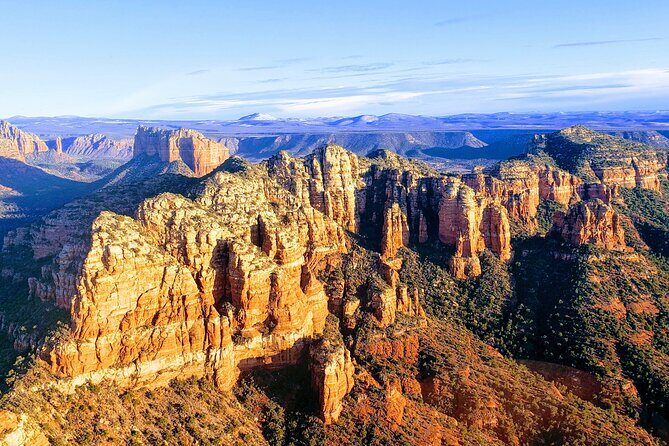
The whole trick with an Ancient Sedona 30+ Mile tour is that you’re not just sampling one postcard view. You’re doing a broad aerial loop that strings together many of Sedona’s most recognizable formations, plus a lot of canyon walls you’d never see from the ground unless you hiked for days.
From the start, you’ll take off and land from the airport, so your first minutes are about getting your bearings. Then the route heads toward Red Rock State Park, which is a good early warm-up. From above, you can see how the red layers, switchbacks, and rock buttresses connect—things that look separate on trails become part of one bigger system of canyon cuts and mesas.
Another practical win: the itinerary keeps moving. You’re not waiting around for long photo stops, and you’re constantly getting new angles. That matters because helicopter rides are short. The more your time is spent over “this is exactly what that name refers to” spots, the more the experience feels worth it.
There’s also a human element. The ride is led by pilots who explain what you’re seeing in plain terms—people like Jeff and Joshua show up in the feedback, and the consistent theme is that the pilot keeps it friendly and understandable. That turns a fast ride into a guided one.
A few more Sedona tours and experiences worth a look
Cathedral Rock, Chapel Views, and Bell Rock: the icons you’ll actually recognize

Once you’re off the ground, you quickly land in the zone of the famous names. One highlight is flying eye-level toward the top of Cathedral Rock. From the air, Cathedral Rock isn’t just a single peak—it’s a stack of distinct rock sections and edges. You also get a sense of scale: the cliffs aren’t “tall in a dramatic way,” they’re tall in a way that shapes how people move and where trails run below.
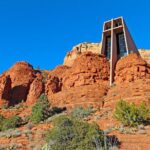
Next you’ll get aerial views of the Chapel of the Holy Cross. From the ground, the chapel usually comes with the background of red rocks and town views. From above, it becomes a piece of the larger design: you can see how the chapel sits within the surrounding canyon geometry. If you like understanding how built spaces relate to the terrain, you’ll appreciate this part.
Then the tour moves to Bell Rock. Bell Rock is one of those formations where the details change with where you stand. In the helicopter, the angles change fast, so the “why it looks the way it does” becomes easier to grasp. Instead of imagining the rock’s curves, you see them.
Is it always the same from every seat? Not exactly—but with all-forward-facing seating, you’re much less likely to feel stuck with a “wrong-side view.” That’s a big deal on a short ride. You don’t want to spend your limited airtime looking at only part of the story.
Broken Arrow Trail and the Praying Hands: reading Sedona’s famous shapes from above
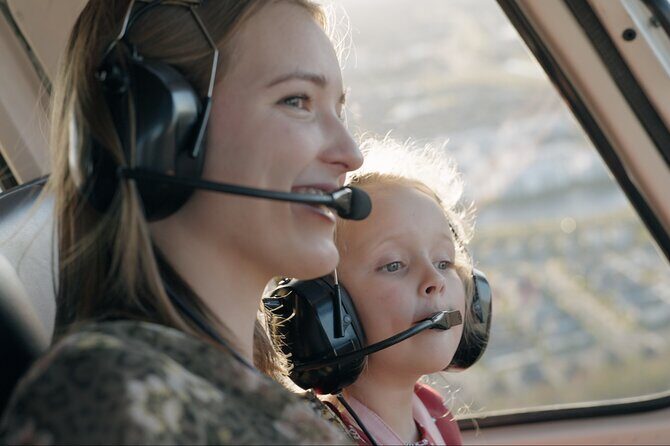
Sedona has a bunch of rock nicknames, and the most fun moment for many people is when those names line up with what you see in the air. The route includes a section flying by the Broken Arrow Trail area, highlighting features such as the Praying Hands, Chicken Point, and Submarine Rock.
Here’s why this section works so well: on the ground, those shapes can feel like landmarks you might recognize later. From above, the forms become clear and directional. You can see how the rock angles connect and how the “hand” shape forms from a specific arrangement of ridges and outcrops. It’s one of the few times you get to look at a formation and immediately understand why the nickname stuck.
As you keep going, the tour also passes Courthouse Butte and other well-known rock views, including Snoopy Rock, the Tea Kettle, Eagle Rock, and the Cowpies. These are the kinds of names you hear everywhere in Sedona. Flying over them helps you connect the names to the actual three-dimensional shapes rather than a guess.
One thoughtful detail: the itinerary keeps transitioning between clusters of formations. Instead of one long stretch where you’re only watching canyon walls, you’re repeatedly “zooming in” on named features. That keeps you engaged and helps you follow the geography.
Oak Creek Canyon, Midgely Bridge, and the “how far does it go” effect
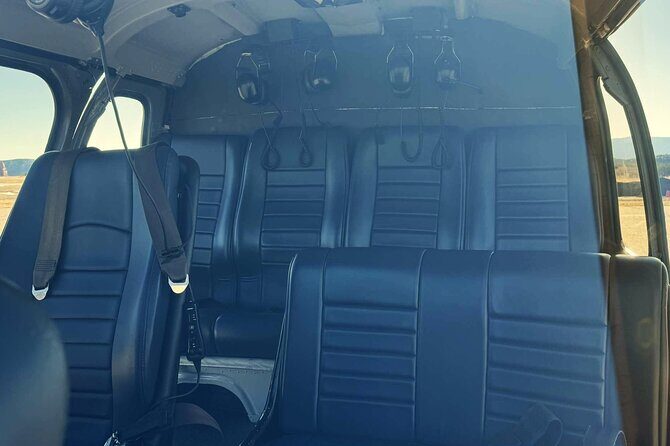
After the formation-heavy parts of the route, you’ll get bigger-picture canyon views. The tour includes Midgely Bridge from the air, and that’s a memorable kind of view because bridges always look different from above. You can see the span, the surrounding rock channels, and how the canyon narrows and widens.
Then comes Oak Creek Canyon, which is a strong mid-tour anchor. Flying through the mouth of Oak Creek Canyon and later getting views of Steamboat Rock, Ship Rock, and Oak Creek Canyon helps you understand how the canyon carves the region. Even if you don’t have time to hike, you still get that “how far does this go” feeling.
The itinerary also calls out a canyon with rock pillars and seasonal waterfalls. From the air, seasonal water (when it’s there) can change everything visually. You’ll see how the water threads through rock channels and how it highlights the canyon structure in a way that still photos don’t always capture.
One note: because this tour depends on good weather, you’ll get the best results when visibility is strong. If conditions are hazy or cloudy, you may still enjoy the route, but the canyon detail won’t pop the same way. That’s why weather matters more for this kind of aerial viewing than for, say, a museum stop.
Secret Canyon and ancient ruins: when the names shift to deep history
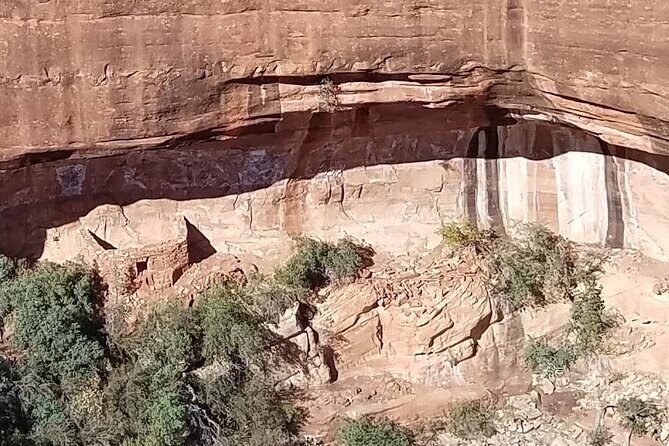
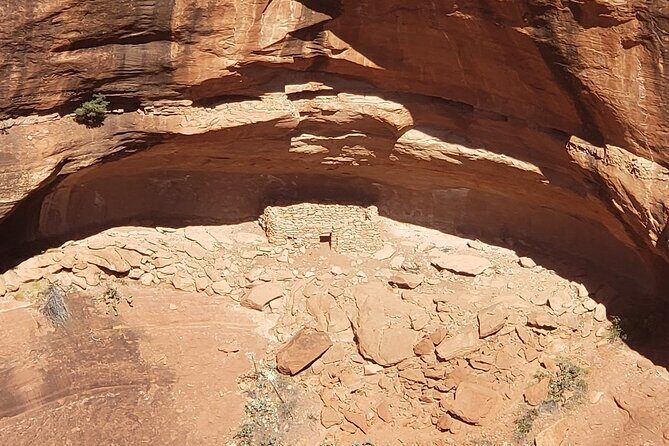
One of the most interesting parts of this tour is that it’s not only about rock shapes. The route includes flying through areas tied to ancient Sinagua ruins, including Boynton Canyon and Long Canyon.
From above, “ruins” can feel abstract. But when you’re in a helicopter, you get a sense of why settlements happened where they did—sheltered areas, routes through canyons, and access to natural resources. Even if you don’t know every archaeological detail ahead of time, the aerial angle helps you understand the human logic behind the location.
The itinerary also includes Secret Canyon past Secret Mountain and Fly through Boynton Canyon and Fly through Long Canyon with ancient ruins. Those sections are where the ride can feel more grounded. You’re not just looking at shapes; you’re watching how people likely traveled and where they built, based on the terrain layout.
You’ll also see more canyon complexity: rock pillars, narrows, and channels. This is the kind of information that helps you connect Sedona’s present-day trail names to the terrain itself. If you like your travel with a little context—just enough to make the place feel real—you’ll appreciate these segments.
A few more Sedona tours and experiences worth a look
Coffee Pot Rock, Soldiers Pass, the natural bridge, and the 3 Fingers perspective shift
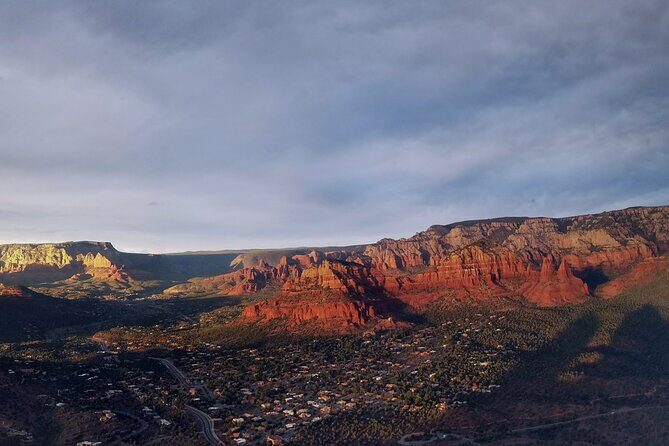
Toward the back half of the flight, you get a nice mix of distinctive points: Coffee Pot Rock, Soldiers Pass, the Mitten, and Sphinx Rock. These are the kinds of features that make Sedona feel like a place with hundreds of “I recognize that” moments.
The itinerary also includes a view of a natural bridge from the air, described as one of the most popular hikes in the area. Flying over it helps you see why it draws people in: the bridge isn’t just a single object, it’s part of a route and a canyon setting.
Then comes one of the more fun visual changes: Chimney Rock turning into the 3 fingers as perspectives change. This is exactly the sort of “only from the air” transformation that makes a short helicopter ride feel like a special event. From the ground, you might only see one version of the shape. From above, you see how viewpoint creates different silhouettes.
Finally, you’ll fly past Schuerman Mountain on your way back to the airport. That return segment matters because it gives you one more wide view of the area you just flew over—almost like a last chance to connect all the named points into one coherent map.
Comfort, seating, and the flight rules that keep it smooth
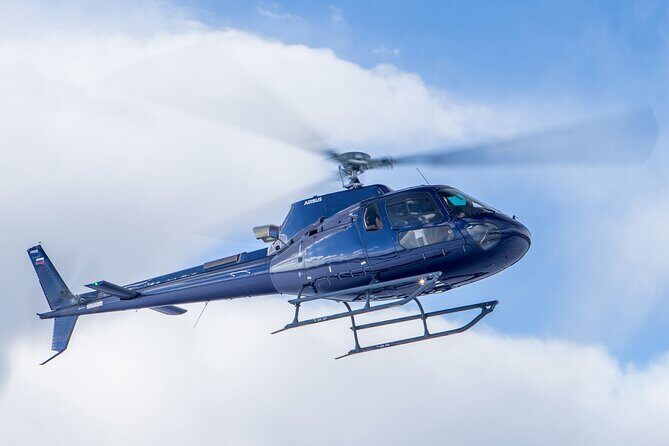
This tour is set up for comfort and clarity. You’ll have a noise-reducing headset with microphone, which helps you hear the pilot’s explanation without turning the ride into a guessing game. You’ll also ride in an air-conditioned vehicle before getting to the helicopter, which is a practical upgrade in Sedona’s weather swings.
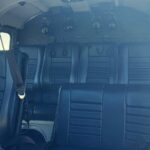
Seating is a major plus: all forward-facing seating. That’s not just a nice-to-have. On a helicopter tour with lots of named stops, you want your eyes forward for the bulk of the route. No one wants to feel stuck while the pilot points out key views they can’t really see.
The ride is also set for small groups—maximum of 6 travelers. Smaller groups usually make it easier to feel less rushed, especially when you’re transitioning through the ride.
Two rules to take seriously:
- You’ll need to avoid flying if you are sick.
- There’s a total weight limit per passenger of 269 lbs, so you’ll want to check that before booking.
And because it depends on conditions, the tour requires good weather. If poor weather cancels it, you’ll be offered another date or a full refund.
Price and value: what $306.48 buys in 20–22 minutes
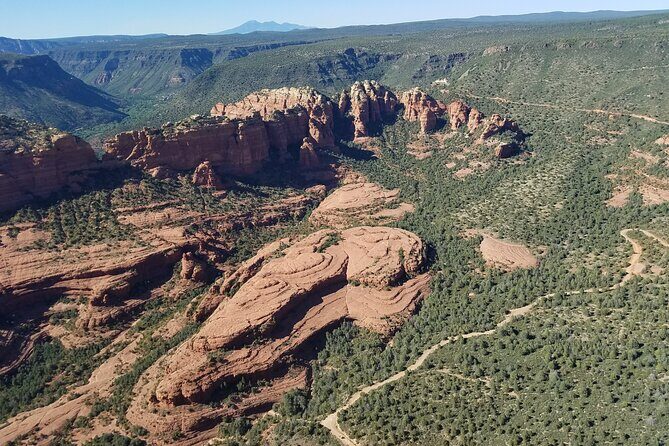
Let’s talk value, not just cost. At $306.48 per person for about 20 to 22 minutes, this isn’t a budget activity. What you’re paying for is concentrated time in the air over a lot of named, recognizable sites.
You’re not paying only for the ride itself. You’re paying for:
- Coverage of about 30 miles, including deeper and more remote canyon sections.
- Frequent “named landmark” flybys, like Cathedral Rock, Bell Rock, the Praying Hands area, Oak Creek Canyon, and multiple rock-point clusters.
- A setup designed for you to actually see it—forward-facing seats and a headset.
If you’ve ever looked at Sedona and felt that you’re missing the “how everything connects” view, this tour gives you that quickly. It also gives you context you can use later. Even if you hike afterward, you’ll remember what you saw: ridges, canyon mouths, and where features sit relative to each other.
Is it short? Yes. If you want maximum airtime, you might compare to longer helicopter options when available. But if you want a focused, high-impact aerial sampler that hits many of the best-known and best-named parts of the area, this fits the bill.
Should you book Ancient Sedona (30+ Mile)?
Book it if you want the best way to see a lot of Sedona quickly without committing to long hikes. The all-forward-facing seating, the small group size, and the pilot’s clear explanations make it easier to enjoy the ride even if you’re not an expert on every rock formation.
Skip it or reconsider if you’re dealing with health issues that make flying uncomfortable, if your weight is above the stated limit, or if you know weather often affects your plans. Also, be honest about the time: this is a 20 to 22 minute tour, so you’ll need to treat it like a quick aerial highlight reel.
If you want a practical “yes,” I’d say it’s a strong choice for first-timers who want real aerial recognition of the icons—Cathedral Rock, Bell Rock, Oak Creek Canyon—plus the Sinagua ruins context from above.
FAQ
How long is the Ancient Sedona (30+ Mile) helicopter tour?
The tour lasts about 20 to 22 minutes.
How much does it cost per person?
The price is $306.48 per person.
Where does the tour start?
The meeting point is 1225 Airport Rd, Sedona, AZ 86336, USA.
Does the tour include a headset?
Yes. It includes a noise-reducing headset with a microphone.
Are the seats forward-facing?
Yes. All forward-facing seating is included.
How many people are on the tour?
The maximum group size is 6 travelers.
Is there a weight limit?
Yes. The total weight per passenger is listed as 269 lbs.
What happens if weather is poor?
This experience requires good weather. If it’s canceled due to poor weather, you’ll be offered a different date or a full refund.
What is the cancellation policy for a full refund?
Free cancellation is available up to 24 hours in advance for a full refund. If you cancel less than 24 hours before the experience starts, the amount paid is not refunded.