REVIEW · SEDONA
Wild Wild West Tour of Jerome
Book on Viator →Operated by Jerome Ghost Tours · Bookable on Viator
Jerome can feel like a Western, even when the story is copper. This 90-minute small-group tour mixes frontier-style storytelling with very real mining-era details, so you leave seeing the town more clearly than if you wander on your own. You’ll hear it from a local resident guide and hit key stops that are packed with meaning, not just photos.
I really like how the tour is built for fast landmark time. You get to the Audrey Shaft Headframe Park for that glass-overlook view, then move on to the historic mining markers without the usual solo slowdown. I also love the guide style, especially when Courtney or Austin takes the lead. Their pacing is sharp, their humor shows up at the right moment, and you get context that makes Jerome click.
One heads-up: this is more Jerome history than true Wild West showmanship. The Wild West angle shows up as a small thread, while the core story is the mining town transformation. It’s also mostly walking with one hill, and good weather matters since the experience requires it.
In This Review
- Key Things I’d Make Sure You Notice
- Why Jerome’s Mining-Era Story Hits Like Frontier Lore
- Price and Time: What $60 Buys You in Real Value
- The Route: Meeting at 403 Clark St and Staying on Schedule
- Stop 1: Audrey Shaft Headframe Park and the Glass-Overlook
- Stop 2: United Verde Copper Company Marker and the Scale of World War I Copper
- Stop 3: Sliding Jail, Fault Lines, Blasting, and Erosion
- Douglas Mansion Museum: Where Mining Meets Mansions and Gambling
- The Walk: One Hill, a Good Van, and How to Prepare
- Guides Courtney and Austin: Why Their Stories Matter More Than the Stops
- Passing the Wineries: A Nice Bonus, Not the Main Event
- Best Fit: Who Should Book This Tour?
- Quick Booking Advice Before You Commit
- Should You Book the Wild Wild West Tour of Jerome?
- FAQ
- How long is the Wild Wild West Tour of Jerome?
- How much does the tour cost?
- Where do we meet for the tour?
- Is this tour mostly walking?
- Does the tour work for most people?
- What happens if weather is bad?
Key Things I’d Make Sure You Notice
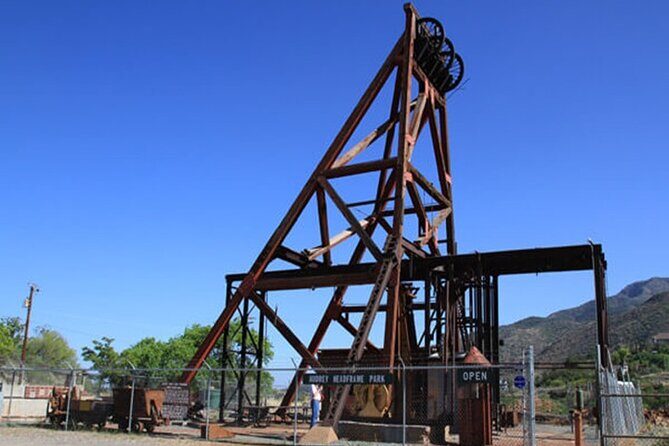
- Audrey Shaft glass platform above a 1,900-foot shaft, in the huge wooden headframe completed in 1918
- United Verde Copper Company history starting in 1882, tied to major financiers and World War I copper production
- Sliding Jail story: Jerome moved on fault lines, blasting, and erosion, with the jail sliding about 225 ft
- Douglas Mansion museum with mining equipment and saloon gambling-era remnants that you’d miss wandering alone
- Small group limit (max 14), so your guide can actually keep track of pace and questions
- Passing wineries on the route, a nice extra if you plan to linger in town afterward
Why Jerome’s Mining-Era Story Hits Like Frontier Lore
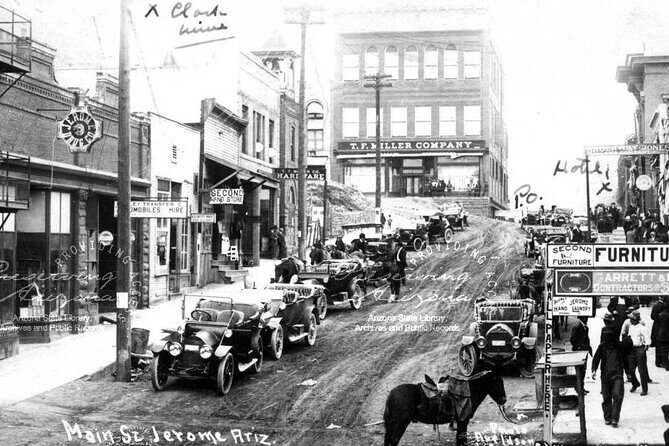
Jerome has a way of feeling dramatic. The geography is steep, the buildings look like they’ve seen it all, and the town’s past is tied to risk and sudden change. What makes this tour special is that it doesn’t treat Jerome as just a pretty hillside stop. It treats Jerome as a place where big forces—mining, money, and geology—shaped daily life.
The guide’s job is to connect the dots. You’re not just told that copper mattered. You learn why it mattered, who paid for it, and how that money built the town’s fortunes for decades. That’s where the Western vibe sneaks in: boomtown energy, hard work, and the sense that one shake-up could change everything.
Other Jerome tours we've reviewed


Price and Time: What $60 Buys You in Real Value
At $60 per person, this tour is priced for people who want a guided primer without paying for a full day. The total time is about 1 hour 30 minutes, and in that window you cover multiple landmark areas. If you’re short on time in Sedona or nearby and want a high-yield activity, that makes sense.
It also helps that the group is capped at 14 travelers. Smaller groups usually mean faster movement and more attention from the guide, and the reviews you’ll read about this tour consistently point to that kind of steady, controlled pace. Add the fact that you get a mobile ticket, and the experience feels easy to join without lots of complicated steps.
If you’re expecting a big production or a long sit-down history lecture, this isn’t that. It’s a compact walking format where the value comes from efficient stops and strong storytelling.
The Route: Meeting at 403 Clark St and Staying on Schedule
You meet at 403 Clark St, Jerome, AZ 86331, and the tour returns you back to the meeting point. That loop matters. It keeps you from needing to plan your own transportation between scattered sites, which is a common headache when you’re visiting a steep little town.
Plan on mostly walking. This tour is described as a walking tour, with one hill you have to go up. Most people can participate, and the guide is used to adjusting pace for different physical needs, including limitations mentioned in the reviews.
Because the experience depends on good weather, I’d also be smart about what you wear and bring. Comfortable shoes help a lot. If you’re visiting in a season with sudden storms, have a backup plan for rain and wind.
Stop 1: Audrey Shaft Headframe Park and the Glass-Overlook

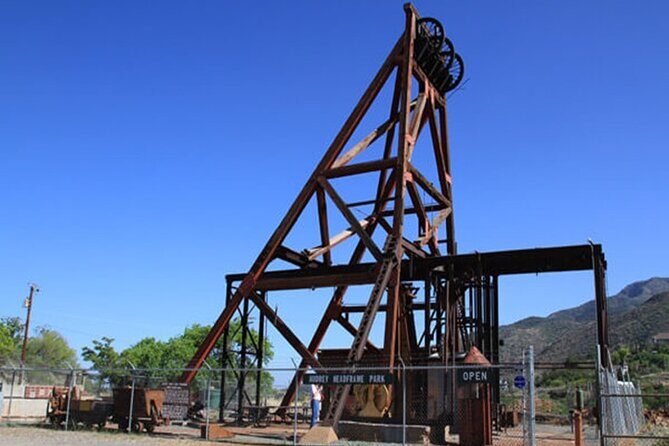
Your first major stop is Audrey Headframe Park, next to Jerome State Historic Park. It’s open daily from 8:00 am to 5:00 pm, and the tour includes about 15 minutes here with an admission ticket included. This stop is the sort of place where a guide can turn numbers into something you can actually picture.
Here’s what you’re looking at: the Audrey Shaft Headframe Park lets you stand on glass above a 1,900-foot shaft. That headframe isn’t small history either. It’s the largest wooden headframe still standing in Arizona, completed in 1918. The vertical scale is wild—your guide will point out that the shaft is about 650 feet higher than the Empire State Building’s highest point.
What to do during your time there:
- Take a slow look down before you rush to photos. The glass adds a real sense of height.
- Listen for how the headframe ties into Jerome’s mining operations, not just its appearance.
- If you’re with kids or anyone who gets nervous on heights, let the guide know early so they can help with pacing.
The main drawback here is simple: it’s a focused stop. You won’t have half a day to wander. If you love mining structures and want more time for extra photos, you might later return on your own.
Stop 2: United Verde Copper Company Marker and the Scale of World War I Copper
Next comes the United Verde Copper Company – Historic Marker area, also with about 15 minutes on tour. The admission is free here, and the story is the backbone of Jerome’s rise.
This operation was established in 1882. Your guide will connect it to major players, including Territorial Governor Frederick Tritle, plus financing from New York investors such as Eugene Jerome—the person the town is named after. It’s one of those moments where you realize the town’s fate wasn’t only local. It was tied to national and international money.
The scale is the key takeaway. The massive ore mined there was taken for over 70 years, producing over a billion dollars worth of copper, gold, silver, zinc, and iron. During World War I, this mine was described as the world’s largest copper producer. That’s why your guide frames Jerome as more than a historic backdrop. It was industrial power.
What you should watch for:
- Listen for how long the mining cycle lasted. That explains why Jerome’s buildings and social life formed the way they did.
- Pay attention to how mining money shaped the town’s growth and later change.
Because this is a marker stop, you won’t be touring inside large buildings. Still, the marker sets the context so the next stops hit harder.
Other Western dinner and stage shows in Sedona



Stop 3: Sliding Jail, Fault Lines, Blasting, and Erosion
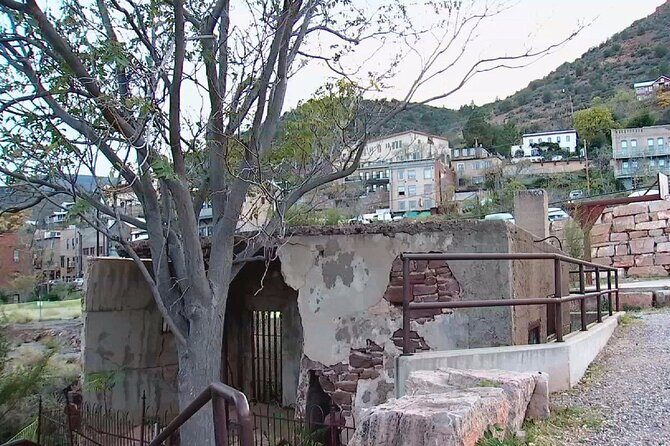
Now you get the story element that feels almost too strange to be real: the Sliding Jail. The tour gives you about 15 minutes here, and it’s free.
During the 1930s, parts of Jerome slid as a landslide affected the town due to fault lines. Explosions from the United Verde Copper Company and water erosion played major roles. The details are the punchline: portions of Jerome moved about 1 1/2 feet every month at the peak of the situation. The sliding jail reportedly moved roughly 225 feet from its original foundation.
This stop is great for two reasons. First, it makes Jerome’s steep streets and uneven footing feel like part of the town’s story, not just a design quirk. Second, it gives you a tangible example of how mining activity and geology can collide.
Practical tip: wear shoes with decent grip. Even if you’re just standing near the area, the terrain is a reminder that Jerome is built on slopes and movement.
Douglas Mansion Museum: Where Mining Meets Mansions and Gambling
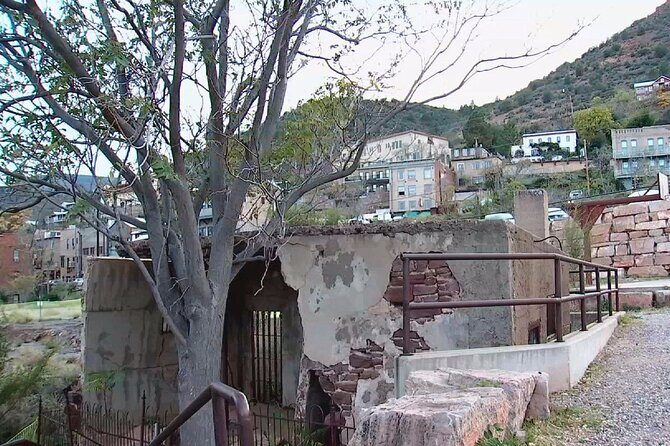
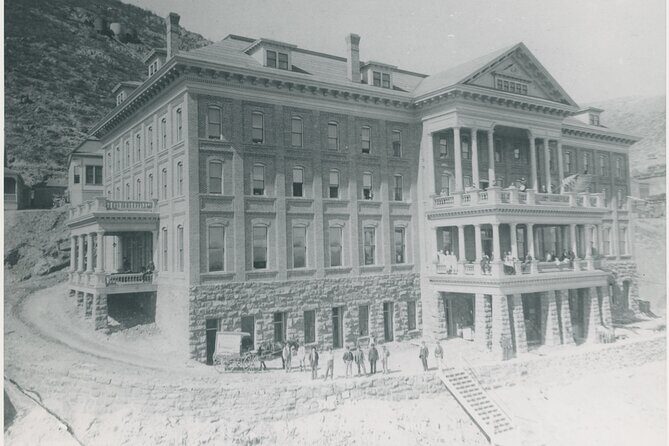
After the big outdoors stops, the tour shifts you toward the Douglas Mansion area inside Jerome State Historic Park. The Douglas Mansion was built in 1916 by influential mining entrepreneurs in Jerome. The museum inside helps explain how that money turned into architecture, lifestyle, and community impact.
The museum and gift shop opened in the early 1950s. Inside, you’ll see displays that cover Jerome’s timeline—past to present—along with items that connect to life during the mining era. Your guide will steer you toward what matters, including old miners’ equipment and remnants tied to gambling in saloons.
This is also the point where you may feel the tour’s theme clarified. Yes, there are frontier vibes, but the main point is understanding how mining shaped daily life—who had power, what work looked like, and what people did for fun when the town was busy.
If you like museums but hate wasting time, this is a smart balance. You don’t need to research every exhibit before you go. The guide gives you a framework so the museum stops feel meaningful.
The Walk: One Hill, a Good Van, and How to Prepare
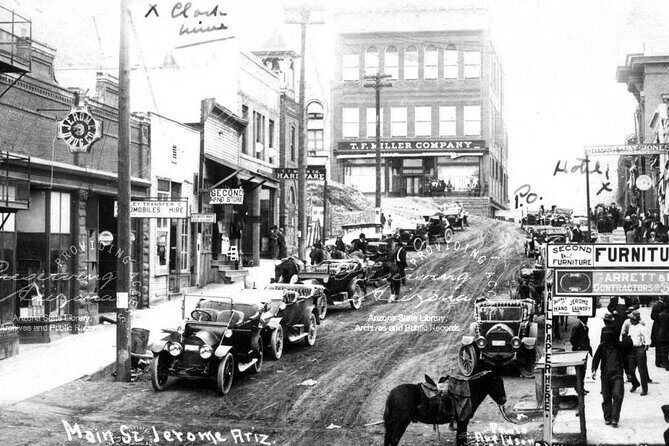
This experience is described as mostly walking, with one hill involved. That matters if you’re deciding whether it fits your day. If you’re visiting with older relatives, stroller plans, or anyone with limited mobility, consider going slower and asking the guide about pacing.
The good news is that guides here seem used to handling physical limits with care. Courtney, in particular, is mentioned in the reviews as being kind and considerate with guests who had physical limitations. Austin is also praised for pace and keeping things moving at a comfortable rhythm.
What I’d do before you arrive:
- Wear supportive shoes with grip.
- Bring water, especially if you tend to overheat.
- If weather looks iffy, keep a light layer ready since the experience requires good weather.
If you show up prepared, the walk stops feeling like a chore and turns into an easy way to connect the stops.
Guides Courtney and Austin: Why Their Stories Matter More Than the Stops
The best reviews focus on the guides. Courtney and Austin come up again and again for storytelling, humor, and factual detail. What I like about that approach is simple: a landmark is just a landmark until someone explains why it matters.
A strong guide helps you see patterns. Why the copper operation created wealth. Why certain buildings appeared when they did. Why Jerome’s challenges were not random, but tied to both geology and industry.
There’s also a practical side. If you do this early in your day or trip, the town becomes easier to navigate afterward. Multiple reviews mention doing it early so the rest of your visit makes more sense. That’s good travel logic: get your bearings first.
Passing the Wineries: A Nice Bonus, Not the Main Event
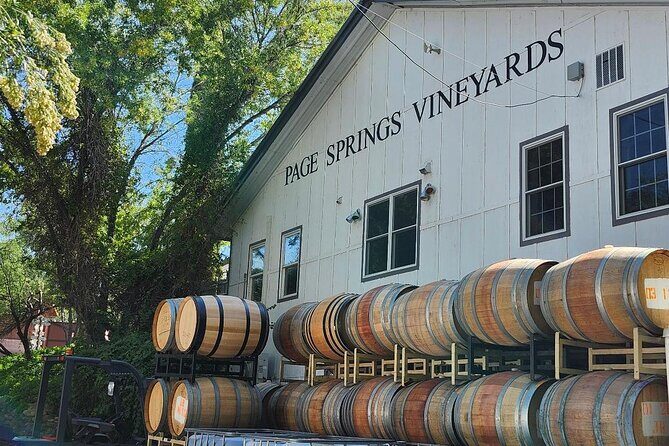
As part of the route, you’ll pass by fine wineries in Jerome. This is not a formal wine tasting stop with time to drink. Think of it as a helpful visual cue for what you can do after the tour.
If you want a later afternoon plan, this works well. You get the history first, then you can wander back into town with ideas. If wine is your thing, you’ll probably appreciate seeing what’s around while you still have the guide’s context in your head.
If you’re not into wineries at all, don’t worry. The tour’s core value is the mining and town-story stops.
Best Fit: Who Should Book This Tour?
This tour is a strong match if you want:
- A first-time Jerome orientation that connects key landmarks
- A guide who explains how Jerome’s mining era ties together
- A compact activity that fits into a busy Sedona-area schedule
- A walking format with only one hill and a small group size
It’s less ideal if you want:
- A big, guns-and-straw-hats Wild West performance focus
- Lots of time to wander each stop on your own
- An all-driving tour where you never step out and walk
Quick Booking Advice Before You Commit
Book it if Jerome is on your list and you want history that feels real and specific. Do it early in your visit so you can interpret what you see afterward. And if you’re traveling around weather swings, check conditions and be ready because this experience requires good weather.
Also, give yourself a little extra buffer for getting to the meeting point on time. The tour is efficient, so arriving right on schedule helps everything run smoothly.
Should You Book the Wild Wild West Tour of Jerome?
Yes—if you’re here for Jerome’s story and want the smartest shortcut through its most important landmarks. The mix of the Audrey Headframe glass overlook, the United Verde Copper Company context, and the Sliding Jail tale makes the town feel far bigger than it looks on a map. Plus, with guides like Courtney and Austin, the storytelling is clearly a main reason people rate this tour so highly.
Skip it if your idea of Wild West means a strong focus on that theme over mining-town history. This tour leans heavily into Jerome’s copper-era past, even when it uses frontier-style narration.
If you want one efficient, guided way to understand Jerome in about 90 minutes, this is a solid pick.
FAQ
How long is the Wild Wild West Tour of Jerome?
It runs about 1 hour 30 minutes, approximately, and it ends back at the meeting point.
How much does the tour cost?
The price is $60.00 per person.
Where do we meet for the tour?
You start at 403 Clark St, Jerome, AZ 86331, USA.
Is this tour mostly walking?
Yes. It’s described as mostly a walking tour, with one hill you have to go up during the experience.
Does the tour work for most people?
Most travelers can participate, and service animals are allowed.
What happens if weather is bad?
This experience requires good weather. If it’s canceled due to poor weather, you’ll be offered a different date or a full refund.