REVIEW · SEDONA
Jerome History Walk
Book on Viator →Operated by Jerome Ghost Tours · Bookable on Viator
Jerome is perched high, with a past that doesn’t whisper. On this small-group walk, you’ll hear how the mining town grew from tent-city beginnings into a copper boom place, then you’ll see what’s left behind—equipment, saloon clues, and the Sliding Jail. It’s the kind of tour where the stories make the streets make sense fast.
I especially like how the guides keep things human—Austin and Courtney in particular are mentioned again and again for packing lots of background into the time you’re there. I also like the stop choices: Jerome’s key landmarks plus a clear “what happened here” moment at the Sliding Jail.
One heads-up: Jerome is steep, and the walking is not for everyone who wants an easy stroll. If you’re hoping for long, wandering foot time, some tours keep the movement short and focus more on narration and viewpoints.
In This Review
- Quick hits before you go
- Why Jerome’s history works best with a guide
- Jerome stop: From tent city to copper boom
- Sliding Jail: The 225-foot dynamite disaster
- Museum and gift shop time: Where the timeline hangs out
- How much walking is real on steep Jerome streets
- Tour value: Is $39 worth it for 1 hour?
- Guides and pacing: When the storytelling clicks
- Who should book this history walk
- Getting the most out of your hour
- Should you book the Jerome History Walk?
- FAQ
- Where does the Jerome History Walk start?
- How long is the tour?
- What language is the tour offered in?
- How large is the group?
- Do I need to print a ticket?
- Is this tour family friendly?
- Is admission included for the stops?
- Are service animals allowed?
- Can I cancel for a full refund?
- Is it near public transportation?
Quick hits before you go

- Small group size (max 15) keeps the tour feeling personal and easier to follow on hills
- Sliding Jail stop explains the 1930s dynamite collapse that dropped the jail 225 feet
- Museum + gift shop gives you a self-guided way to linger after the walking portion
- Guides like Austin and Courtney tend to bring the town’s timeline to life with energy
- Steep terrain means you should plan for stairs and short hops between spots
Why Jerome’s history works best with a guide
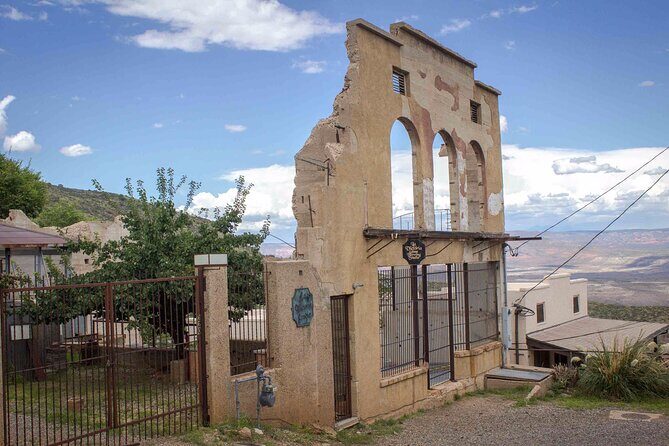
Jerome has the look of an old frontier town, but the real story is in the details. A guided walk helps you connect what you’re seeing—mining pieces, building remains, and street-level landmarks—to the forces that shaped the town.
This is also a good way to get your bearings quickly. You’ll get the timeline thread right away, from the earliest tent-city days to the booming mine-town era, so when you wander later on your own, the places don’t feel random.
Finally, you get a guide-led rhythm that fits a one-hour visit. Some tours leave you feeling like you just got pulled from stop to stop with no payoff. Here, the stops are the payoff.
Other Jerome tours we've reviewed



Jerome stop: From tent city to copper boom

The main introduction focuses on how Jerome’s story forms the streets you walk. You trace the town’s blueprint from early beginnings—when things were more improvised and temporary—into a real mining town with structures, businesses, and a strong pull for workers.
What makes this first stop especially useful is that it sets expectations for the rest of your time in Jerome. When someone explains the “why” behind the town’s growth, you start noticing details you would miss alone, like how mining life influenced where things were built and how the town operated.
You should expect storytelling, not just facts. Several people talk about guides who stay lively and bring context, and that matters here because Jerome’s past can feel blunt. If you want the town’s grit explained clearly, this is a strong fit.
Possible drawback: if you’re aiming for an all-walking, step-by-step street tour, the first stop may feel more like a guided orientation than an extended walk with constant stopping every block.
Sliding Jail: The 225-foot dynamite disaster
Then you hit one of Jerome’s most iconic landmarks: the Sliding Jail. In the 1930s, dynamite blasts from copper miners contributed to the jail sliding off its foundation. The move was dramatic—225 feet—down into the middle of a main street.
That stop works because it gives you a vivid cause-and-effect story. It’s not only about a strange sight. It’s about how mining activity reshaped the town’s geography, buildings, and safety in real time.
You’ll get a focused chunk of time here. The stop is brief (about 15 minutes), so I’d treat it like a “pay attention closely” moment: listen first, then look around after. If you try to do photos and reading at the same speed, you might miss the story that makes the scene click.
Museum and gift shop time: Where the timeline hangs out

After the landmark stops, you get time at the Museum and Gift Shop. The museum’s collections and displays cover the town’s past-to-present timeline, and you’ll also see artifacts that connect directly to mining life and the town’s older business culture.
The Museum includes items such as old miners equipment, plus remnants tied to saloons and gambling. That combination is a big part of why this works: you’re not only hearing about production and industry. You’re seeing how everyday life looked in the same place.
One extra angle from visitor comments: the town has some standout architectural stories too, like a former church site where burnt wood was reused for window trim. You may encounter details like this during the tour route or in the areas you visit around your museum time, so it’s worth slowing down and looking.
Practical tip: if you like reading display labels, give yourself a little extra time here. The tour gives you structure; the museum is where you can control your pace and linger.
How much walking is real on steep Jerome streets

Jerome is dramatic in elevation. The tour is designed for a one-hour window, and that shapes the experience.
In practice, that often means shorter walking between a few key points rather than a long loop of constant meandering. People have commented on the terrain being steep and on there being stairs, while others noted the walk is fairly limited. That tells me the tour is best approached as a guided stop-and-story experience, not a “wander and explore every block” promise.
Also, guides are reported to adjust for different mobility needs, including patience for participants who take extra time. That’s not a guarantee for every group, but it’s a good sign that the experience is managed with real-world bodies in mind.
My advice if you’re planning footwear: wear grippy shoes and expect uphill stretches, even if the total walking time feels short. If you’re traveling with kids or older adults, this is doable, but you’ll want to plan for steps and uneven surfaces.
Other walking tours we've reviewed in Sedona


Tour value: Is $39 worth it for 1 hour?

At $39 per person for about an hour, the value depends on what you want out of Jerome. If your goal is quick context and a guided timeline, the price makes sense. You’re getting a small-group format (maximum 15), a guide-led narrative, major stop access, and the chance to explore the Museum and Gift Shop after.
The stops are also efficient. You’re not paying to sit through generic driving directions or long transit time. You’re paying for a focused explanation of what makes Jerome distinctive—mining growth, town development, and the Sliding Jail story.
What might make it feel pricey to some people is the limited walking component. If you’re coming with the expectation of a full-blown walking tour where you spend most of the hour moving block to block, you may feel like you wanted more pavement time.
So here’s the simple way to decide: choose it if you want guided clarity. Skip it if you want a self-guided day where you control every step and every stop for longer than an hour.
Guides and pacing: When the storytelling clicks

The best reviews have a common thread: the guides know how to keep the tour moving and make the town understandable. Austin and Courtney come up repeatedly for being engaging, passionate, and organized, and Cloe is also mentioned as an entertaining guide.
You can also see how pacing matters. Some people ask for slower speech and note the guide tries to accommodate. That’s a good thing to remember: if you’re at the edge of hearing clarity—because of wind, slope, or crowd spacing—saying something is reasonable. A small group helps, too, because it’s easier for the guide to adjust than in a large crowd.
Another plus is the guide’s ability to handle mixed ages. Jerome isn’t flat, and families aren’t all moving at the same speed. People comment on guides being mindful about what’s appropriate and manageable for different participants, which makes the tour more comfortable and less stressful.
Who should book this history walk

This is a strong match for first-timers who want to understand Jerome quickly. If you like mining towns, gritty local stories, and seeing how past industry shaped a place, you’ll get a lot out of the combination of landmark stops and museum time.
It also works well for families. The tour is described as family friendly, and guides are reported to be patient with participants who need extra time.
It might not be the best fit if you:
- want an easy, flat stroll with lots of free roaming
- prefer a lighter tone and not much about the darker side of town life
- are hoping to spend most of the hour simply walking through shops and blocks
A final note on expectations: this is history focused, not a theme-park performance. If you like real places with real dates and real consequences, you’ll likely enjoy it.
Getting the most out of your hour
You’ll get the best results if you show up ready to listen and look. Jerome rewards observation, but the guide puts the story in the right order so your eyes know what to search for.
Here’s how I’d plan it:
- Bring comfortable shoes for hills and steps
- Keep your phone available for photos after the story, not during every sentence
- If you struggle to hear, ask for a slower pace rather than waiting
- Use the Museum time to follow up on whatever site grabs you most
Also, since the tour ends back at the meeting point, you can easily transition into shops, snacks, or a longer solo wander afterward without a confusing logistics shuffle.
Should you book the Jerome History Walk?
Book it if you want a compact, guided way to understand what made Jerome grow—and why its most famous landmarks look the way they do. The small-group format and the standout Sliding Jail story make it feel worth the hour.
Skip it if you’re chasing a long walking circuit. In that case, you’d probably be happier doing a self-guided wander through town first, then choosing a museum visit on its own.
If you’re the type who likes local stories explained clearly—especially ones tied to mining and town life—this is a smart way to start your Jerome day.
FAQ
Where does the Jerome History Walk start?
The tour starts at 403 Clark St, Jerome, AZ 86331, USA, and it ends back at the meeting point.
How long is the tour?
The Jerome History Walk runs for about 1 hour.
What language is the tour offered in?
The tour is offered in English.
How large is the group?
The tour/activity has a maximum of 15 travelers.
Do I need to print a ticket?
A mobile ticket is used.
Is this tour family friendly?
Yes, it’s described as family friendly.
Is admission included for the stops?
Admission tickets are listed as free for the tour/activity.
Are service animals allowed?
Yes, service animals are allowed.
Can I cancel for a full refund?
You can cancel up to 24 hours in advance for a full refund.
Is it near public transportation?
Yes, it’s listed as near public transportation.