REVIEW · SEDONA
Sedona: Stargazing Tour with Telescopes and Video Astronomy
Book on GetYourGuide →Operated by Night Owl Tours · Bookable on GetYourGuide
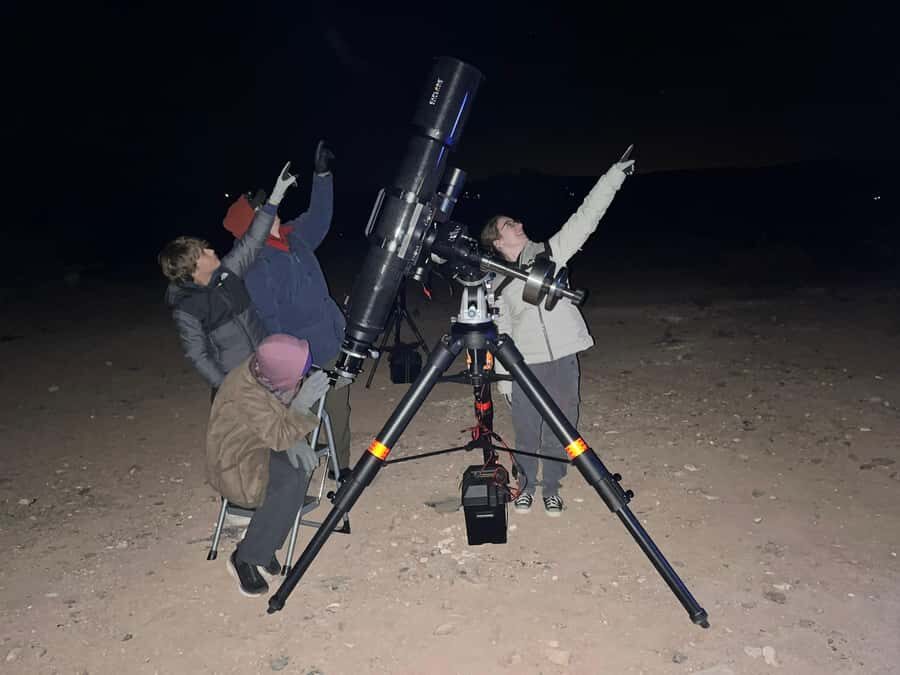
Sedona at night changes how you see the universe. This 90-minute stargazing tour pairs premium large-aperture telescopes with video astronomy on a 4K OLED screen, so you can spot both bright objects and faint deep-sky targets you’d miss with your eyes alone. Chris, your guide, walks you through the sky with laser pointers and myth-and-facts stories, then helps you connect what you’re seeing to real astronomy.
I especially like the two-layer approach: first you learn the zodiac and constellations, then you swap from classic eyepiece viewing to electronically assisted astronomy. One thing to consider is that the final stretch to the dark-sky spot may feel a bit tricky if GPS gets weird, so follow the meetup directions carefully and arrive with time to spare.
In This Review
- Key things I’d bank on before you go
- Why Sedona’s night sky tour is built around telescopes and video
- Meeting at a USFS dark-sky site near Uptown Sedona
- Constellations and zodiac: laser pointers with stories you can remember
- Visual viewing with premium eyepieces: Moon, planets, and double stars
- Video astronomy (EAA) on a 4K OLED TV: seeing color and structure
- The guide experience: Chris keeps it light and answers real questions
- Comfort in the cold: chairs, blankets, and what to wear
- Timing, seasons, and cloudy-night reality checks
- Price and value: $125 for gear, teaching, and real-time imaging
- Who this Sedona stargazing tour suits best
- Should you book it? My take
- FAQ
- How long is the Sedona stargazing tour?
- Where does the tour meet?
- Is transportation to the dark-sky site included?
- What can I see during the tour?
- Do I need to bring anything?
- What happens if the weather is cloudy?
- Is this tour suitable for young children or people with mobility limits?
Key things I’d bank on before you go
- Laser-guided constellations that make the zodiac feel practical, not random
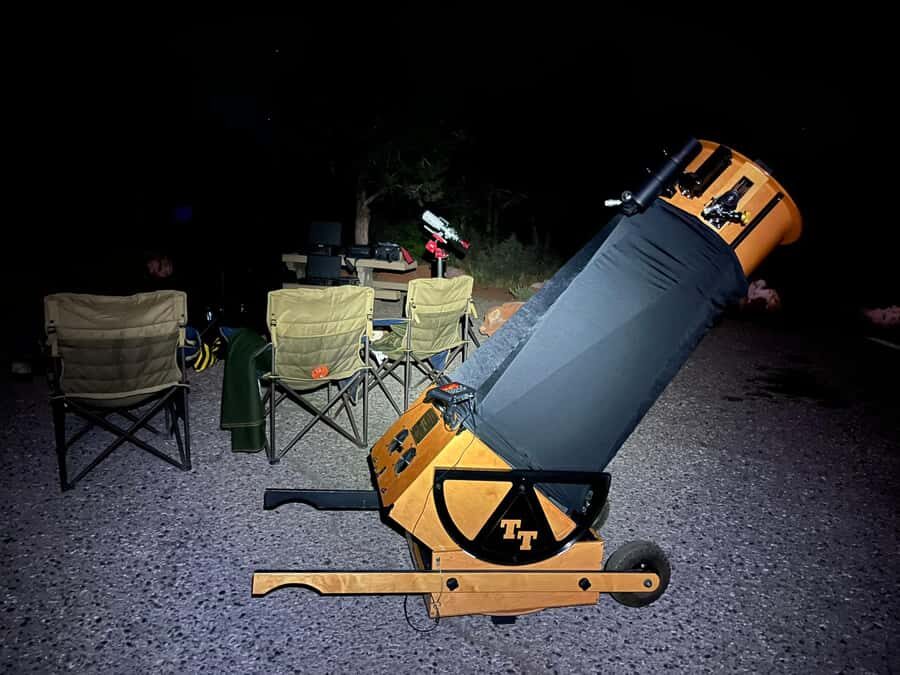
- Big telescope viewing for the Moon, planets, double stars, and brighter deep-sky treats
- Video astronomy (EAA) that turns faint galaxies and nebulae into a visible show on a 4K screen
- A real guide named Chris who keeps it fun while answering questions on the spot
- Chairs, blankets, and warm-layer weather planning so you can focus on the sky, not the cold
Why Sedona’s night sky tour is built around telescopes and video
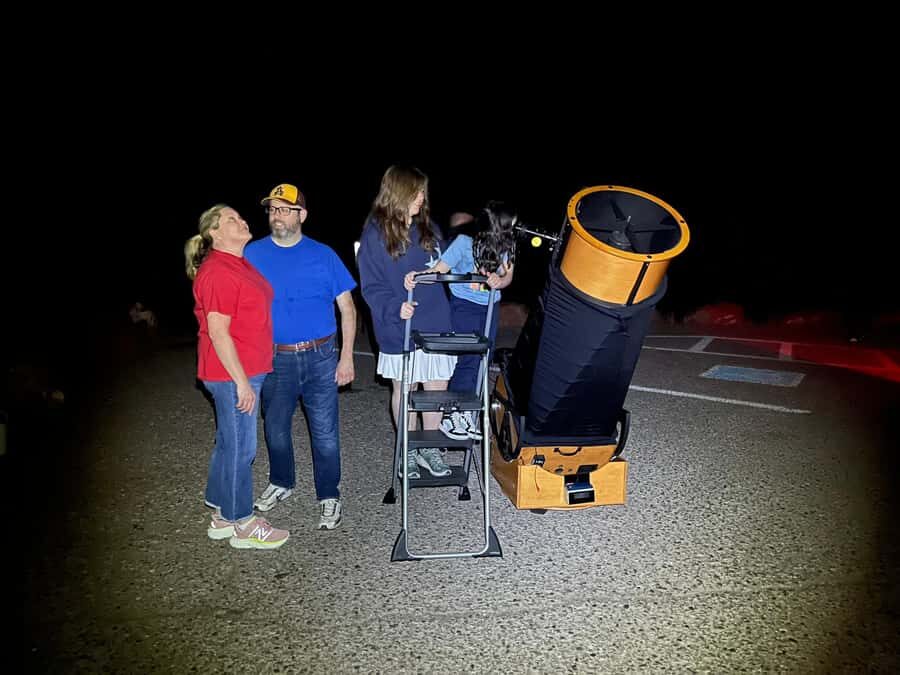
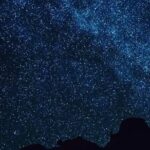
A Sedona sky is dark enough to matter, and this tour makes sure you don’t waste that darkness. You get both visual observing and video astronomy, which is a smart combo if you’re a first-timer or if you’ve stared at the sky before and still want more.
The visual side is where the planets and the Moon shine. The video side is where the “hard stuff” shows up clearly—color hints in nebulae, structure in galaxies, and dust lanes that are basically invisible to the naked eye.
Other stargazing and night sky tours in Sedona

Meeting at a USFS dark-sky site near Uptown Sedona
You meet your astronomer at a prearranged dark-sky site within about a half hour drive of Uptown Sedona. The exact location can change by season because access runs through forest lands under a USFS permit, so you’ll get the specific directions after booking.
This is the part that pays off when you plan ahead. Since transportation to the site isn’t included, you either need your own vehicle or you’ll need a ride arranged. If you’re using taxi or ride-share, it’s worth pre-booking a pickup for after the tour, because late-night rides can be hard to line up.
One more practical note: if your GPS is spotty near the final right turn, follow the sent instructions closely. I’d rather you arrive stressed for two minutes than nervous for the whole tour.
Constellations and zodiac: laser pointers with stories you can remember
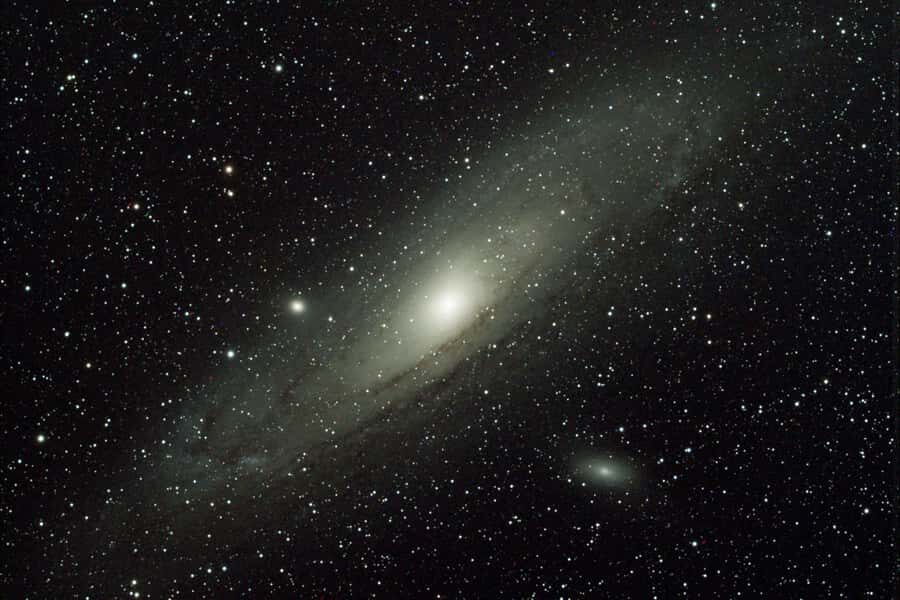
The tour starts with a guided constellation walk. Your guide traces star patterns with a laser, naming what you’re looking at and sharing the myth and stories behind the shapes. This matters because it turns random dots into a map you can actually use.
You also get pointed-out sky highlights as they become visible: bright stars, the zodiac area, and likely sightings such as planets, the Milky Way, meteors, and even passing artificial satellites if conditions line up. Some nights are better than others, but the structure stays the same.
If you’ve ever felt like astronomy is something you need a degree for, this part helps. You learn what matters first—how to recognize patterns and where to look—so the telescope time feels connected, not separate.
Visual viewing with premium eyepieces: Moon, planets, and double stars
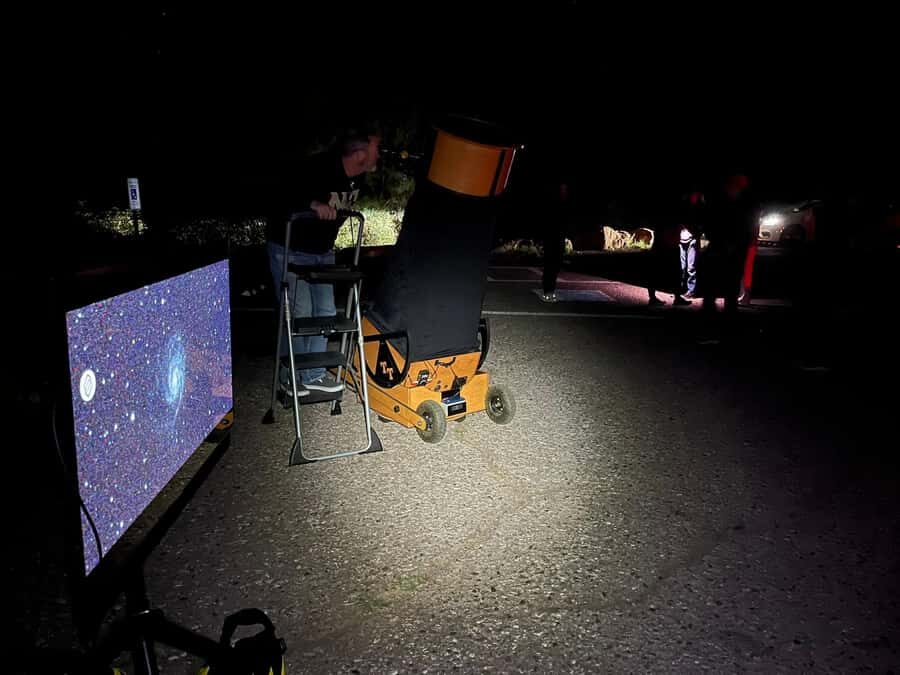
After the constellation intro, you move to the telescopes. This tour uses two observing modes, and the visual stage is the one that feels most classic.
With high-quality eyepieces on the visual telescopes, you can look at:
- the Moon’s detail
- planets when they’re up and visible
- double stars (pairs that look separate)
- brighter deep-sky targets that are still tough but possible in a dark sky
The value here is simple: you see the objects as they appear through an eyepiece, which has a different feel than a screen view. It also helps you build “astronomy eyes,” meaning your brain learns how to interpret faint contrast and small details.
And yes, guides often help with the in-between moments—like when you’re not sure you’re centered on the object. That quick adjustment can make the difference between seeing something once and seeing it well.
Video astronomy (EAA) on a 4K OLED TV: seeing color and structure
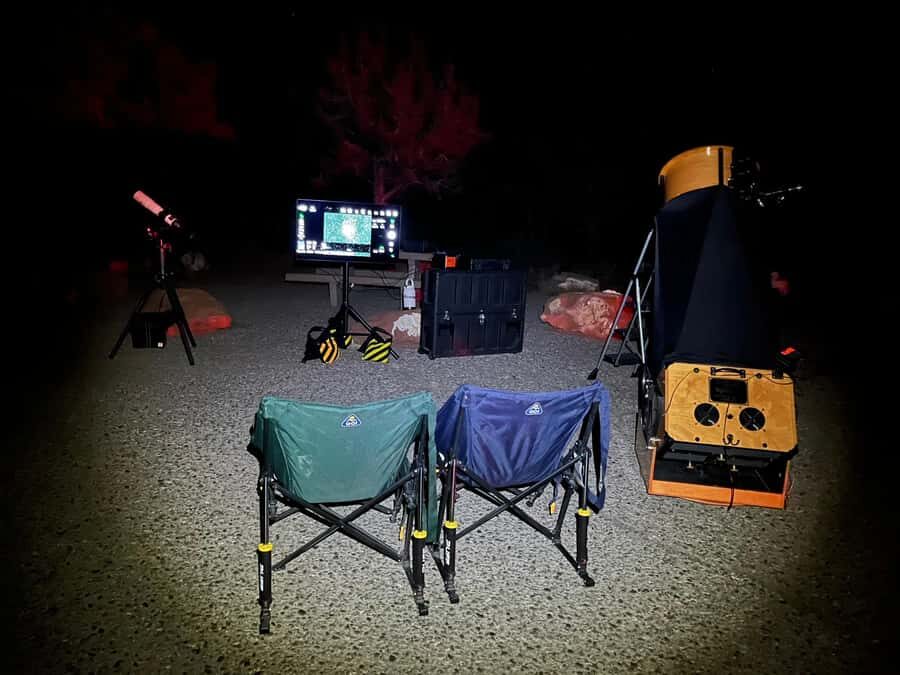
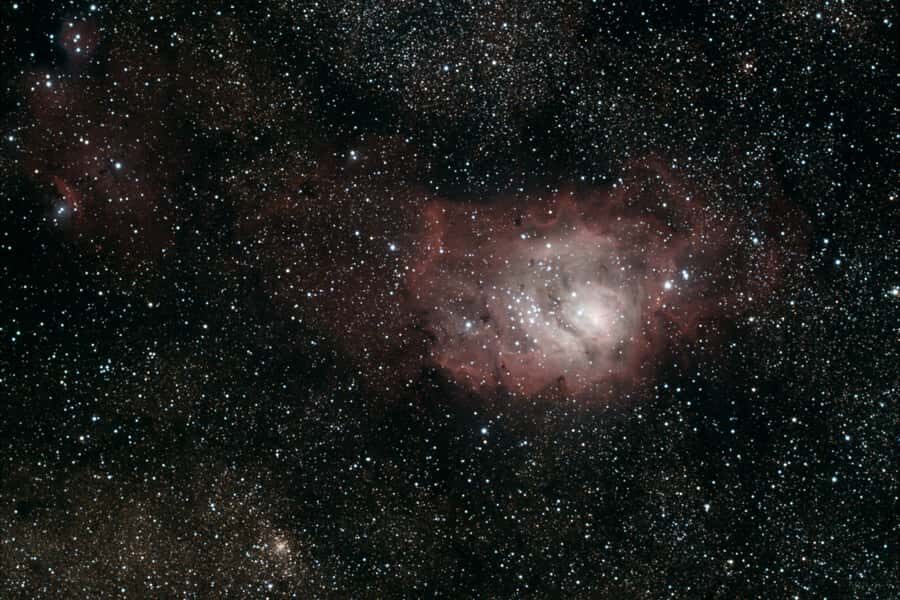
This is the section that turns the tour from pretty good into genuinely memorable for a lot of people. Some deep-sky objects are too faint for even large telescopes to show well to the human eye, so the tour switches to special astronomy cameras and streams live images to a 4K OLED TV.
Astronomers call this electronically assisted astronomy (EAA). The camera is far more sensitive to light than your eye, so you can pick up details that the naked-eye view won’t show clearly.
On the screen, you may see the kinds of objects that people dream about in astronomy books, such as:
- the pinkish red glow of hydrogen in stellar nurseries
- colorful remnants from dead suns
- the bluish dust glow around the Pleiades star cluster (often called the veil surrounding it)
- dust lanes in distant galaxies
This isn’t just “a video of the sky.” It’s live observing support. The guide explains what you’re seeing while the image comes in, which helps you understand why the colors and shapes look the way they do.
If you want one takeaway, it’s this: the TV isn’t replacing the telescope—it’s showing you what the telescope can’t easily show your eye in real time.
The guide experience: Chris keeps it light and answers real questions
A stargazing tour lives or dies on the guide. In this case, Chris is the reason the night feels like a conversation instead of a demo.
You’ll get myth-and-story explanations for the constellations, but also practical guidance on where to look and how to make the most of what’s visible. People also mention Chris’s dry humor and the way he handles questions smoothly, even ones that stray into more obscure territory.
That style matters. Astronomy can feel intimidating, but a guide who keeps things fun and approachable helps you stay present. You spend more time looking up and less time trying to translate jargon in your head.
Comfort in the cold: chairs, blankets, and what to wear
This tour is outdoors at night, and your comfort affects your ability to actually enjoy the sky. The good news: you get padded chairs and blankets, so you’re not doing a hard stand-and-freeze situation.
Still, you should dress like the cold will show up. Bring warm clothing—jacket, long-sleeved shirt, long pants—plus closed-toe shoes and warm footwear. Layering wins, especially because nighttime temperatures can shift fast.
One small upgrade I like to plan for: keep your hands warm. If you’re adjusting small telescope parts or just trying to hold still for long views, cold hands can distract you from the sky.
Timing, seasons, and cloudy-night reality checks
Stargazing depends on clear conditions. If the sky is cloudy, the tour may be canceled, and it can also be canceled for dangerous weather such as storms, flood warnings, or dangerously high winds.
Season matters too, because the tour’s dark-sky sites on forest lands can change. You won’t choose the exact spot, but you will get the specific meetup directions once your booking is confirmed.
What you can control is your readiness. Arrive with warm layers, keep your plans flexible, and don’t assume every night produces the same sky show. The tour is designed to teach and guide through whatever the conditions allow.
Price and value: $125 for gear, teaching, and real-time imaging
At $125 per person for 90 minutes, the cost isn’t bargain-basement. But this isn’t a “look through a scope for ten seconds” moment either.
You’re paying for:
- premium large-aperture telescopes
- high-quality eyepieces for visual observing
- video astronomy gear with live streaming to a 4K OLED TV
- a guide who runs the full experience, starting with constellations and finishing with deeper objects
The value is strongest if you’re a first-timer or if you want to see more than just bright stuff. Video astronomy expands the menu, making it possible to observe faint targets that most people will never see from light-polluted home areas.
There’s also a practical value: if you’ve got limited time in Sedona, this gives you a structured night-sky experience close to Uptown, without you needing to rent gear or learn the sky on your own.
Who this Sedona stargazing tour suits best
This tour is child-friendly, and it’s also a solid choice for couples looking for a romantic night under the stars. The key is that it’s still an outdoor night experience on uneven terrain.
That means it’s not a fit if you:
- are under 7 years old
- have limited mobility or difficulty negotiating uneven terrain at night
- use a wheelchair
- weigh over 300 lbs (136 kg)
It’s also not a “bring alcohol and hang out” type of outing. Smoking, vaping, alcohol, and drugs aren’t allowed.
If you’re generally mobile, comfortable sitting outside, and you want guided stargazing with both eyepiece and video astronomy, this is a very strong match.
Should you book it? My take
Book it if you want a night-sky experience that teaches you how to find things and then helps you actually see them. The combination of constellation guidance, visual telescope observing, and EAA video astronomy on a 4K screen is the real advantage here.
Skip it if you hate cold nights, can’t manage uneven terrain after dark, or you’re looking for a quick casual look without instruction. Also skip if you don’t have a way to get to the dark-sky site—transport isn’t included, and late-night pickups can be annoying.
If you do book, arrive with warm layers and pay attention during the constellation part. That’s when your brain starts working like an astronomer for the rest of the night.
FAQ
How long is the Sedona stargazing tour?
The tour runs for 90 minutes.
Where does the tour meet?
You meet at a prearranged dark sky site near Sedona. The exact location changes seasonally and you’ll receive full meetup directions after booking. All sites are within about a half hour drive of Uptown Sedona.
Is transportation to the dark-sky site included?
No. You’re responsible for getting to and from the dark-sky site by your own vehicle or by arranging a taxi/ride-share.
What can I see during the tour?
You can view the Moon, planets, stars, and constellations with telescopes. You’ll also use video astronomy with a 4K OLED TV to view colorful galaxies and nebulae, including faint deep-sky objects that are hard to see with the naked eye.
Do I need to bring anything?
Yes. Bring warm clothing such as a jacket, long-sleeved shirt, long pants, closed-toe shoes, and warm footwear. A warm layer matters because it’s an outdoor nighttime experience.
What happens if the weather is cloudy?
Stargazing requires clear conditions. The tour may be canceled due to cloudy weather, or for dangerous weather conditions such as storms, flood warnings, or dangerously high winds.
Is this tour suitable for young children or people with mobility limits?
It isn’t suitable for children under 7 years. The tour is not recommended for people with limited mobility, and it isn’t suitable for wheelchair users or people with difficulty negotiating uneven terrain at night. It also has a weight limit of 300 lbs (136 kg).