REVIEW · SEDONA
Treasure Hunter Escape Room
Book on Viator →Operated by Constant Evolution Escape Rooms · Bookable on Viator
Escape rooms work best when you forget the outside world. This one drops you into the office of Professor Marcus Montgomery in 1976, then challenges you to figure out what really happened. I love the clear mission focus, and I also like the fact that the game is built for short, intense teamwork rather than a long maze.
You’ll get a structured run: check in, prep, play for 60 minutes, then debrief and take photos with your crew. I also like that it’s designed for a small group max of 8, so it doesn’t turn into chaos. One possible drawback to plan for: unless you book out the whole room, you could be joined by other players.
If you’re new to escape rooms, don’t overthink it. The staff approach is friendly, and your first hour can still be a win, even if you don’t solve everything.
In This Review
- Key things to know before you go
- Treasure Hunter Escape Room: the 1976 mission that keeps you moving
- Where you meet in the Sedona area (and how parking works)
- The game run-down: check-in, prep, then 60 minutes to escape
- Before you start: prep time and getting oriented
- In the game: the office scene and your investigation mission
- After the timer: debrief and crew photos
- Puzzles, clues, and the reality of the 60-minute clock
- Small groups, shared rooms, and what personalized really means
- Price and value: $30 for an hour of teamwork (and how it stacks up)
- Who should book Treasure Hunter (and who might want a different fit)
- Practical tips so your team actually enjoys the hour
- Should you book Treasure Hunter Escape Room in the Sedona area?
- FAQ
- How long is the Treasure Hunter escape room experience?
- Where is the meeting point?
- How many people can be in the game room?
- Will I be playing with other groups?
- What age is recommended, and do minors need an adult?
- How early should we check in?
- Is food or drinks included?
Key things to know before you go
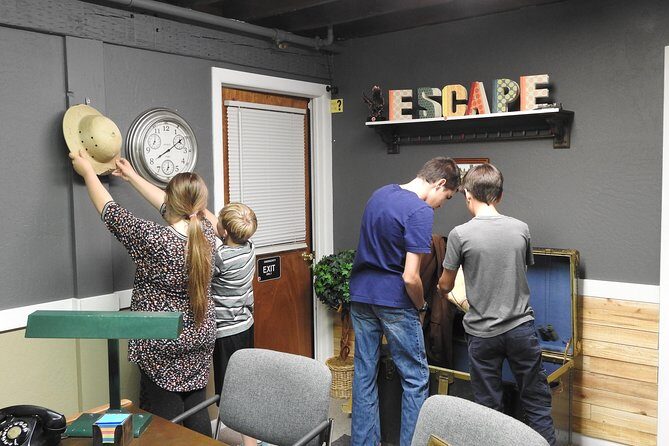
- A 1976 mystery plot set inside Professor Marcus Montgomery’s office
- Steal the ancient golden artifact as the main goal of the game
- 60 minutes of puzzle solving with a clear time pressure
- Small group limit (8 players max) and easy-to-follow “easy/medium” difficulty
- Photo moment after the game plus a short debrief for closure
Treasure Hunter Escape Room: the 1976 mission that keeps you moving
The Treasure Hunter Escape Room is built like a story you can participate in, not just a series of locks. The premise is that you’re stepping into Professor Marcus Montgomery’s office in 1976, and your job is to investigate his untimely death while uncovering what might be going on behind the scenes.
What I like most is how the mission is framed around urgency. You’re not wandering room to room hoping you’ll find something eventually. You’re working toward a specific payoff: stealing an ancient golden artifact by collecting clues and solving puzzles. That structure tends to help first-timers, because you always know what you’re aiming for.
And yes, the game is designed around teamwork. The puzzles require quick thinking and determination, which means the smartest move is usually to split tasks, share what you find, and keep talking out loud. If one person gets stuck, the group can pivot fast.
The overall tone is “fastest hour of your life” energy, and the 60-minute limit makes you feel that pressure in a good way. It’s challenging without being endless.
Other escape rooms in the Sedona area


Where you meet in the Sedona area (and how parking works)

This experience starts at 551 S Main St, Cottonwood, AZ 86326. It ends back at the meeting point when your game and wrap-up are done.
Plan to check in 15 minutes before your game start time. That timing matters because the schedule includes prep before you enter the active game, plus a debrief and photos afterward. If you show up late, you’re basically stealing time from the part you came for.
Parking is free. You can park in the lot behind the building or in the connecting parking area around State Farm Insurance. That’s helpful in a place where parking can be the difference between starting calm and starting stressed.
You’ll use a mobile ticket, and you’ll need to show your Viator Voucher as proof of purchase at check-in. Service animals are allowed, and most travelers can participate, which makes this a reasonable “do something active” choice for a wide range of people.
The game run-down: check-in, prep, then 60 minutes to escape
Although the overall booking is listed at about 1 hour 30 minutes, the “work” portion is the game itself: 60 minutes of intense fun. The rest is setup and wrap-up.
Here’s the flow you should expect.
Before you start: prep time and getting oriented
You’ll check in 15 minutes early. During that time, you’ll get ready for your mission. For a puzzle room, prep time is where you figure out how to communicate efficiently. If you’re with friends or family, this is also when you can quietly agree on roles like clue finder, puzzle reader, or timekeeper.
This part is especially valuable if it’s your first escape room, because it reduces that awkward first-10-minutes confusion where everyone waits for someone else to act.
In the game: the office scene and your investigation mission
Once the game starts, you’re in the office world of 1976 Professor Marcus Montgomery. You’ll collect clues, solve puzzles, and work toward stealing the ancient golden artifact. If you follow the clue trail and keep sharing findings, the game tends to click.
The difficulty is listed as easy/medium, and the room is designed for 8 players max. That matters because puzzle rooms can fail in two directions: too hard for casual groups or too easy for experienced teams. This one targets the middle so you can feel challenged without feeling defeated.






After the timer: debrief and crew photos
When your 60 minutes end, you don’t just walk out. You’ll get 15 minutes after the game to debrief and take photos of your crew after your task is complete.
That photo moment is more than a souvenir. It’s also a useful reset. It gives you a chance to talk through what happened—what clues mattered, what decisions slowed you down, and what you’d do differently next time. Even if you don’t escape, that debrief helps your brain turn the experience into something you remember for the right reasons.
Puzzles, clues, and the reality of the 60-minute clock
A 60-minute escape room timer can either make you hyper-focused or make you flail. Treasure Hunter is built so you can do well if your team stays active and communicates.
The mission goal is clear: steal the ancient golden artifact. That goal gives your clue gathering a purpose. Instead of collecting random tidbits, you’re trying to convert information into progress.
Here’s how to use the time effectively without needing special puzzle skills.
- Assign one person to narrate what you find. When clues are discovered, don’t assume others understand immediately. Quick summaries prevent duplicate effort.
- Keep the whole team in the loop. Even if one person is solving a piece, the others can scan for related clues.
- Move fast when you hit a dead end. In an easy/medium room, there will be moments when you simply need a different angle. The best teams shift tasks instead of stalling.
In the reviews people repeatedly mention that the hour flies by quickly. That tracks with the structure: 1976 office scenario, clue gathering, puzzle solving, and a firm time boundary. You don’t get stuck in “someday we’ll figure it out” mode. You get urgency with a direction.
Small groups, shared rooms, and what personalized really means
The experience is described as limited to your group for a personalized experience. But there’s also a key detail: unless you book out the entire room, you could be joined by other players.
So what should you expect in practice?
- Your room experience is capped at 8 players max.
- If you’re booking with your own group and you don’t take over the whole schedule slot, you may share the game with others.
- If you want maximum “just our crew” energy, you’ll need to book out the room.
This is the one planning consideration that can change the vibe. If you prefer that everyone already knows each other, you’ll want to book with enough people to secure the room—or at least confirm that your slot won’t be mixed.
The upside is that the room’s easy/medium difficulty and the teamwork emphasis usually make mixing work fine. You’re all there to solve the same mission, and the shared goal tends to flatten awkwardness.
Price and value: $30 for an hour of teamwork (and how it stacks up)
The price is $30.00 per person, and all taxes, fees, and handling charges are included. Food and drinks are not included, so you’ll want to handle that on your own before or after.
Is $30 a good value? For a game room, the value comes down to two things:
- How much “real time” you get in the challenge. You get 60 minutes of active puzzle solving, plus structured prep and wrap-up.
- Whether the experience feels guided and worth the effort. The setup is clearly designed well, and staff support shows up as a recurring theme in the feedback people leave. When it’s your first escape room, that support matters.
The reviews also highlight that even when groups didn’t escape, they still had a great time. That suggests the design focuses on experience quality, not just a win-or-fail scoreboard.
One small note to keep in mind: the booking is non-refundable and cannot be changed. So if your schedule is shaky, double-check your timing before you lock it in.
Overall, for Sedona-area visitors who want a high-energy, indoor activity that’s built for teamwork, this pricing feels reasonable. You’re paying for an hour of coordinated problem solving plus a debrief and photos, not just “an entrance ticket.”
Who should book Treasure Hunter (and who might want a different fit)
This is a good match for:
- Families with kids 10 and up. The recommended age is 10 and up, which aligns with the easy/medium difficulty.
- Thrill seekers who still want brain work. It has urgency and teamwork, but it’s not described as extreme physical activity.
- Corporate groups or teams. It’s designed for groups and works well when everyone participates rather than watches.
Age rules are important here. Participants under 18 can play, but an adult 18 or older must remain on site with anyone 15 and under. Also, all participants under 18 need an adult-signed waiver before they can play.
If you’re traveling with younger participants, plan for the possibility that some puzzles may be too difficult. That’s not a dealbreaker, but it’s smart to know ahead of time.
For first-timers: the reviews include people saying it was their first escape room, and the consensus is that the hour moves quickly and feels fun even if it’s complex. If you tend to worry you’ll feel silly not knowing how escape rooms work, my advice is simple: you’ll do fine. The best teams treat it like a team puzzle session with a mission theme, not a test.
Practical tips so your team actually enjoys the hour
You don’t need to be a puzzle expert to have a good time. You just need good team habits and a calm approach to the clock.
Here are the habits I’d use if I wanted the smoothest experience possible.
- Arrive early and ready to start. 15 minutes of check-in/prep isn’t random; use it to settle your group and set communication rules.
- Pick roles quickly. One clue reader, one puzzle handler, one time/notice person. You can swap roles, but start with a plan.
- Keep talking. Escape rooms reward shared observations. If you stop discussing, progress slows.
- Don’t panic if you don’t solve right away. In a game built for easy/medium difficulty, you usually find traction after a couple of clue connections.
- Plan for teamwork over ego. This room is set up so the solution is bigger than one person.
Also, after the game, take the debrief seriously. It helps you understand why the puzzles made sense. That turns a single attempt into knowledge for next time.
Should you book Treasure Hunter Escape Room in the Sedona area?
Book it if you want an indoor activity that feels like a real story, not just a series of random challenges. The mission is clear—steal the ancient golden artifact—and the 60-minute format keeps energy high. The small group cap of 8 helps you stay involved, and the option for staff help means first-timers usually don’t get stuck forever.
I’d skip it or think twice if you strongly prefer not to share a room. Unless you take over the full room booking, you could be joined by other players, which can change the team dynamic.
If you’re in the Sedona area and you want a fun group challenge with a solid theme and a fast payoff window, this is an easy yes. Just check your start time, show your voucher, and bring a team mindset. The fastest hour is waiting.
FAQ
How long is the Treasure Hunter escape room experience?
The booking runs about 1 hour 30 minutes, and the game itself is designed for 60 minutes, with additional time for prep and for debrief and photos.
Where is the meeting point?
The meeting point is 551 S Main St, Cottonwood, AZ 86326, USA.
How many people can be in the game room?
Treasure Hunter is limited to a maximum of 8 players per game.
Will I be playing with other groups?
Unless you book out the entire room, you could be joined by other players.
What age is recommended, and do minors need an adult?
The recommendation is ages 10 and up. You may allow younger participants, but some games may be difficult. An adult 18 or older must remain on site with anyone 15 and under, and participants under 18 need an adult-signed waiver before playing.
How early should we check in?
Check in 15 minutes prior to your game start time.
Is food or drinks included?
No. Food and drinks are not included.